Here is an op-ed from the Roanoke Times...
Carilion Biomedical Institute is creating dividends
Daniel Barchi
Barchi is president of the Carilion Biomedical Institute and chief information officer of Carilion.
The Carilion Biomedical Institute has achieved many exciting milestones since its creation in 1999. Some are visible, such as the activity at the Riverside Center on Reserve Avenue. Some are less visible, but just as important to the development of the region. The CBI board of directors has asked me to share our progress report with the community.
The Carilion Biomedical Institute was established to stimulate regional economic development through medical technology advancement, business creation and research collaboration.
We have delivered on these goals with more than $33 million in economic impact, 10 new companies and 60 new jobs in the Roanoke and New River valleys since 2003. Another milestone will be reached when CBI moves into its new building on Riverside Center next month.
More important than these accomplishments, however, are the relationships and institutions that have sprung from CBI that are now creating growth even beyond CBI's long-term targets.
CBI's goal is to stimulate research by investing in partnerships among Carilion, Virginia Tech and the University of Virginia. By the end of 2006, these three institutions had collaborated to conduct $17 million in laboratory research which has resulted in 100 discoveries, 68 inventions and 22 patents.
While those numbers are significant, the longer-term outcome of this work has been the full-blown partnership between Carilion and Virginia Tech that now includes the recently announced joint medical school and a Carilion/Virginia Tech research institute, which will have the expertise to continue advancing the research mission and spawn research that far exceeds CBI's early lofty goals.
CBI's medical technology advancement goal has been built around our ability to create new companies from university research and attract other growing companies to this area to join a growing bioscience enterprise.
One of the companies that CBI created from laboratory research is OcuCure, Inc., which used CBI-sponsored technology and investment to create an eye-drop formula to stop macular degeneration, blood vessel growth at the back of the eye that blinds 200,000 Americans annually.
OcuCure, headquartered in Roanoke, has now raised more than $2 million in investment and is working to develop the compound into an FDA-approved drug.
CBI used a small seed investment to start OcuCure and several other companies, which are young but growing. CBI's incubation work for small companies led Carilion and Virginia Tech to discuss the need for more investment capital in the region to relocate or fund larger companies and facilitate faster growth.
The result of that conversation is NewVa Capital Partners, a $14 million investment pool funded by Virginia Tech, Carilion and Third Security of Radford, which now invests in promising companies that operate in the Roanoke and New River valleys.
With its move into the new building, CBI is helping to achieve the goal of developing Riverside Center from a brownfield into a business park.
With the partnership of the Roanoke Redevelopment and Housing Authority and the city of Roanoke, Carilion has developed the first biomedical building ahead of schedule, secured a hotel that is now under construction, made plans for a 200,000-square-foot Carilion Clinic building and identified the site for the Carilion/Virginia Tech joint medical school.
By developing new research, companies and jobs, CBI has already created more economic impact than the capital invested in it at its inception. CBI could continue to grow itself and its staff to achieve its goals independently.
Instead, we will focus on our primary business of assisting physician researchers and facilitating medical technology transfer. More important, by facilitating the partnerships and collaborations outlined above, CBI has helped create for this region independent research, business development and education organizations that will help the Roanoke and New River valleys achieve even greater economic success.
Tuesday, March 27, 2007
Carilion Biomedical Institute is creating dividends


Generic Biologics Debated in Congressional Hearing


Dr. Allan was a witness before the House of Representatives Oversight and Government Reform Committee Majority Staff hearing. In his testimony, Dr. Allan stated, "Insmed has developed significant intellectual capital focused towards protein characterization and purification. We have invested in building the facilities required to manufacture quality proteins...The combination of our proprietary protein platform with a biogeneric protein platform meets our goal to sustain innovation along with the ability to provide safe and affordable drugs to address a growing economic issue."
In contrast, Jim Greenwood, President of the Biotechnology
At the same hearing, FDA Deputy Commissioner Janet Woodcock told lawmakers it could be a decade or more before the science is available to safely approve generic versions of biotech drugs in the way the FDA approves generics of traditional drugs derived from chemical synthesis.
Dr. Allen told the committee that his company would be well positioned to produce generic biologics, opening up a new level of competition in the industry. "The science has reached a level of sophistication to make this endeavor entirely possible, all we need now is the regulatory go ahead."
Bob Eaton Resigns As President & CEO of MdBio, Inc.

"Leading MdBio has been rewarding and challenging," said Mr. Eaton. "I am proud of the programs MdBio has developed over the last 10 years that support the growth of bioscience companies in Maryland."
Under Mr. Eaton's leadership, MdBio was instrumental in forging close ties to regional trade associations sharing a common interest in promoting the mid-Atlantic region's bioscience assets. "Bob's commitment to regionalism made the Mid-Atlantic Bio events possible," said Mark A. Herzog, executive director of the Virginia Biotechnology Association. "The political and economic divide between the two states can be pretty wide, but Bob was one of the first to recognize that the industry would benefit by bridging those gaps."
"The respect that MdBio enjoys not only in the state but
"Bob's efforts were instrumental in supporting the growth of our company and so many others across the state," said Dr. Lawrence Tamarkin, President and CEO of CytImmune Sciences, Inc. "His leadership will be missed."
According to the Baltimore Sun, there has been speculation that the merger and a loss of autonomy led to Mr. Eaton's resignation. When asked to comment by the newspaper, Mr. Eaton declined to comment.
MdBio and MdBio Foundation will conduct a national search for the next president. Until a replacement is named, Julie Coons, CEO of the Tech Council, will serve as interim president of MdBio and the MdBio Foundation.
Thursday, March 15, 2007
New BioLife Fund Set to Invest in Life Sciences Sector
New BioLife Fund Set to Invest in Life Sciences SectorBy Kim Hart
Washington Post Staff Writer
Thursday, March 15, 2007; VA12The Center for Innovative Technology this week started a venture fund that will invest in the life sciences sector. The new BioLife Fund is an outgrowth of CIT's growth acceleration program, a three-year-old fund that finances early-stage technology companies in Virginia.
Johnson & Johnson provided the initial investment of $250,000, which will be matched by CIT. The BioLife Fund will finance start-ups in the pharmaceutical, medical devices and health services fields, said Peter Jobse, CIT president and chief executive.
About a third of the companies that looked for financing through the original venture fund came from the biotechnology industry, Jobse said. CIT makes an investment of up to $100,000 and helps to trigger the interest of other angel investors or venture capitalists. CIT's growth acceleration program has invested in 17 firms since it opened in December 2004.
A large concentration of life sciences start-ups has come out of the Charlottesville area, in connection with the University of Virginia, as well as Richmond and Virginia Commonwealth University. About a third of the companies are setting up shop in Northern Virginia, with some scientists coming out of George Mason University.
"The fund is not specific to firms coming out of universities," Jobse said. "We would like this fund to address the needs of the community as a whole, not just one aspect. Technology doesn't necessarily roll out of the [university] labs."
Some venture capitalists are wary of financing life sciences companies because they take much longer to generate a profit or a return on the investment. Jobse said the "social mission" of the fund helps balance out the risk of a long-term investment.
"If it takes nine years and $100 million to produce a great drug, there may not be an immediate payback," he said. "There isn't necessarily a great return on the financial side, but there will be on the social side."
The new fund is looking to provide cash to first-time entrepreneurs with advanced intellectual property, he said.
Friday, March 09, 2007
European Official Urges Caution on Generic Biologics
Caution urged on biologic drugs
By Diedtra Henderson, Globe Staff | March 8, 2007
WASHINGTON -- European regulators told a Congressional panel today that some biological drugs -- such as insulin and human growth hormones -- are simple enough to produce in generic versions, but others are too complex to be safely duplicated.
Generic versions of certain biologics have been allowed in Europe for the last four years, but approval came only after manufacturers conducted rigorous human clinical trials. European regulators recommended today that the United States adopt the same standards.
The testimony came during a Senate Health, Education, Labor and Pensions committee that is considering a bill to permit United States regulators to approve generic versions of biologics, drugs based on living organisms and cells.
Too much flexibility for generic manufacturers in Europe would have “spread suspicion” that the generic biologic products were unsafe, said Nicolas Rossignol, who is responsible for implementing the European Commission’s legislation governing generic biologics. Rossignol testified from Brussels.
Senator Edward M. Kennedy, who chairs the committee, called biologic drugs “miracle medicines” that can come at a steep price to the healthcare system tens to hundreds of thousands of dollars annually per patient. Americans spent an estimated $60 billion on such products last year, according to IMS Health, a healthcare information company, compared with $53 billion in 2005.
Generics that are chemical equivalents to conventional drugs save Americans at least $10 billion per year. The Food and Drug Administration, however, lacks the legal ability to approve generic versions of biologics.
Kennedy, Democrat of Massachusetts, said such legislation should be “led by the science,” while protecting patient safety and valuing the investments made by innovator companies.
Opponents of the current measure, including Senator Orrin Hatch, Republican of Utah, say it lowers safety standards and could imperil patients. Hatch cosponsored legislation that speeds to market generic versions of conventional drugs. He favors requiring that prospective generic biologic manufacturers test their drugs in humans before approval. Hatch also supports establishing patient registries to track side effects that may not occur until years after patients start using a product.
“What we need to do is keep working to get the best legislation,” Hatch said.
Monday, March 05, 2007
VaBIO Podcast Noted in RTD Article
Podcasting a tool for firms
Experts say shows can be helpful in getting message out to public
BY JEFFREY KELLEY
TIMES-DISPATCH STAFF WRITER
Saturday, March 3, 2007
Since its early days circa 2004, podcasting has touched on such subjects as gardening, video games, cooking and sports.
But the online audio or video shows have also become a tool for businesses that want to share a message with their clients, investors or the general public.
Podcasting's audience? Largely male, folks who work out and commuters and business travelers who want something other than music or the newspaper to pass the time.
Lasting about a half hour, podcasts made by Ironworks Consulting revolve around corporate information-technology topics the average person would find perplexing "open source" software, anyone? But such content has an audience: folks who know and work in information-technology, and understand all of its jargon.
"It's kind of a marketing thing because we're showing our perspective on technologies we help clients implement," said Will Loving, the Henrico County firm's chief operating officer. "If someone listens to it, they can actually learn something from it and use it in their day-to-day work."
That's precisely how podcasts should be done, experts say. If made correctly, a corporate podcast can become a marketing and public-relations tool, but it shouldn't look or sound that way.
Steven Hearn, a former Richmonder and president of podcastGO.com, said the programs should be considered "infotainment" -- in other words, listeners should learn something, yet stay amused.
A little more than one in 10 Web users in the U.S. have downloaded a podcast, the Pew Internet & American Life Project said in November. Few consumers appear to download podcasts with great frequency, perhaps a sign the technology is still young. Forrester Research says the adoption of broadband and spread of MP3 players will push podcasting's popularity in the future.
Still, Forrester said last month, Internet videos, blogs and networking sites such as MySpace are still much more trendy with consumers than podcasts.
"My caution is that companies shouldn't be dashing out to create expensive original content for a small audience -- unless they gain value from being seen as innovative," Charlene Li, a Forrester analyst, wrote last year in her blog.
As people who use podcasts know, listeners can subscribe to the programming as they would a magazine, through services such as Apple's iTunes. When a new show is published, it is sent to software on the user's computer or hand-held device such as the Palm Treo.
Chesterfield County-based PrecisionIR Group converts corporate earnings calls and shareholder meetings into podcasts for some clients. It handles investor-relations services for thousands of public and private companies.
"If you're a Wall Street analyst you can download all the earnings calls and listen to them on the treadmills while you work out, or on the train back [home], and listen to what the CEOs have to say," said J. Patrick Galleher, PrecisionIR's chief executive, a frequent flier who, on his iPod, has everything from Guns N' Roses tunes to corporate podcasts from paper and packaging firm Stora Enso.
PrecisionIR began its podcasting service in June 2005, and that year turned 116 corporate events into podcasts. Last year, the firm offered 1,286 podcasts, which were downloaded 64,692 times.
Galleher projects his company will have thousands of podcasts available this year.
Virginia Biotechnology Association Executive Director Mark Herzog has hosted seven podcasts since September. He's interviewed state life-sciences entrepreneurs, government officials, and others involved in the creation of a biotechnology industry in Virginia.
The programs, running anywhere from 10 to 15 minutes, are as much an advertisement for the association as they are informative to those who are engrossed in science.
"Some [listeners] are interested in policy aspects, some are concerned about new trends in science. . . . The podcasts are a way that we can [cover] different topics and people can download those topics to meet their needs," Herzog said.
The association has tracked about 200 downloads of the podcast each month since December. People can subscribe to the podcast for free on the association's Web site, VaBio.org, or through iTunes.
The Federal Reserve Bank of Richmond has been podcasting the speeches of its president, Jeffrey M. Lacker, since December 2005. "It's one of the most popular features on our Web site," Fed spokeswoman Lisa Oliva said, although she did not provide figures.
"It just gives you a greater dissemination of information. Our audience is broader because of podcasting."
Contact staff writer Jeffrey Kelley at jkelley@timesdispatch.com or (804) 649-6348.
This story can be found at: http://www.timesdispatch.com/servlet/Satellite?pagename=RTD/MGArticle/RTD_BasicArticle&c=MGArticle&cid=1149193496236
Friday, February 16, 2007
More on Generic Biologics
This was in the Washington Post:
Generic Biotech Drugs Could Save $71B
By THERESA AGOVINO
The Associated Press
Thursday, February 15, 2007; 12:06 AM
NEW YORK -- Patients and health insurance providers could save at least $71 billion over 10 years if there was a regulatory mechanism that allowed for the marketing of generic biotech medicines, according to a study being released Thursday.
Currently there is no legal pathway that allows generic drug makers to produce biotech medicines, so the pricey treatments, which are derived from a living source such as proteins, have never had to compete with copycat products that drive pharmaceutical costs lower.
Controlling the cost of biotech medicines has become a top priority for those providing health insurance because the cost of such treatments is dramatically increasing. Biotech treatments now account for 25 percent to 30 percent of a company's overall drug costs, according to pharmacy benefit manager Express Scripts Inc., which conducted the study.
Express Scripts said that the average biotech drug costs $71,600 a year, compared with the annual average for a traditional drug of $1,200. It said that escalating biotech drug costs, which reached $40 billion in 2005, are expected to more than double in four years to a total of $90 billion in 2009, a rate three times faster than traditional drug costs.
But on Wednesday, a bill was introduced by a group of bipartisan lawmakers in Washington, D.C., that would give the U.S. Food and Drug Administration the authority to approve copies of biotech drugs. Similar legislation was introduced last year.
Express Scripts conducted the study by taking a 25 percent discount off brand name medicines in four classes of drugs that would already have generic competition because of patent expirations if copycat biologics were allowed. Express Scripts decided on that discount because it said that the generic version of human growth hormone sells at a 25 percent discount to its brand name counterparts in Europe.
The four categories of drugs were: insulin for diabetes, erythropoietins for anemia, growth hormones and treatments for multiple sclerosis.
Dr. Steve Miller, chief medical officer at Express Scripts, said its estimates were conservative because it didn't include other drugs that would lose patent protection over the next 10 years.
Express Scripts said a generic drug typically costs 60 percent less than its brand name counterpart. However, some experts have said that generic biologics may not be that much cheaper than their branded counterparts because it is likely the FDA will require more testing on generic biologics than chemical drug copycats. Biotech drugs are also more expensive to produce.
Kathleen Jaeger, president and chief executive of the Generic Pharmaceutical Association, said her trade group supports the new legislation and that numerous companies within the organization had expressed interest in entering the biotech arena, even though the process might be more expensive and complicated than producing generic chemical drugs.
Jaeger said that even if generic biologics were only 25 percent less than their brand name counterparts, it would be a huge savings for consumers.
"If it (the legislation) gets passed it will be a great win for consumers," she said.
Jim Greenwood, president and CEO of the Biotechnology Industry Organization, cautioned against forecasting any savings from generic biotech drugs without knowing how much testing regulators would require. BIO maintains the drugs won't be true generics because a product made from a living source can never be exactly copied.
"We would be happy to support follow-on biologics legislation as long as that legislation is consistent with some very critical principles: first and foremost of course is safety," Greenwood said.
FDA spokesman Kathleen Quinn said the agency hadn't seen the newly introduced legislation but that it plans to provide technical assistance on the bill. She added that as science has evolved, the agency may be able to eventually approve generic biologic drugs.
Democrats in Congress Press for Generic Biologics
Legislation Would Allow Generic Biotech Drugs in U.S. (Update1)
By Justin Blum
Feb. 14 (Bloomberg) -- Lawmakers in the U.S. House and Senate introduced legislation that would for the first time routinely allow copies of medicines made using biotechnology.
The measures offered today would permit generic drugmakers, such as Barr Pharmaceuticals Inc. and Teva Pharmaceutical Industries Ltd., to produce medications that are now off limits to competition.
``Without action, the manufacturers of these biotech drugs can continue to charge monopoly prices indefinitely,'' Senator Hillary Clinton, a Democrat from New York, said at a news conference in Washington. ``Biotech drugs hold great promise, but we break that promise when the costs push treatments out of reach.''
Generic biotech drugs may reduce prices by almost a third and cut into the profits of brand-name biotech companies including Amgen Inc. and Genentech Inc., analysts say. Opponents of the legislation say attempts to copy complex gene-based medications could pose health risks.
Sponsors of the legislation in the House include Henry Waxman, a Democrat from California, and Jo Ann Emerson, a Republican from Missouri. Backers of a matching Senate version include Clinton and Charles Schumer, Democrats from New York.
Lawmakers introduced similar measures last year that didn't advance in the Republican-controlled Congress. Supporters say prospects have improved with Democrats in control.
Opposition is being led by the Biotechnology Industry Organization, a Washington-based group that represents makers of brand-name biotech drugs.
Passage of the legislation ``may mean that these drugs come onto the market without the testing necessary to make sure they are safe and effective,'' said Paul Winters, a spokesman for the Biotechnology Industry Organization.
FDA's Authority
U.S. law allows the Food and Drug Administration to approve generic versions of conventional drugs, made mostly through chemical synthesis, after patents expire. There is no similar process for most biotech medicines, genetically engineered versions of human proteins such as insulin or growth hormone.
Biotech drugs generated revenue of about $32.8 billion, 13 percent of the $251.8 billion in prescription sales to U.S. pharmacies in 2005, according to IMS Health Inc., a research company in Fairfield, Connecticut.
Many biotech medicines carry high price tags, and generic versions could lower prices by 20 percent to 30 percent, Elise Wang, an analyst with Citigroup Inc. in New York, said in an interview. One of the most expensive biotech medicines is Genzyme Corp.'s Cerezyme, a treatment for a rare enzyme disorder that can cost $200,000 a year.
Expiring Patents
Barr of Woodcliff Lake, New Jersey, says in lobbying literature that patents have already expired for some top- selling biotech medications, making them vulnerable to competition if lawmakers act. Among the products listed is an anemia treatment sold in the U.S. by Amgen as Epogen and by Johnson & Johnson as Procrit. U.S. sales of the drugs, sold by both companies under a marketing agreement, totaled $4.71 billion in 2005.
A report from Citigroup says that one of Amgen's patents lapsed in 2004 and others expire in 2012 through 2015.
Conventional drugs are small molecules that generic makers can reproduce in versions that are almost identical to the original product and change little from batch to batch.
Biotech medications use bacterial cells to produce human proteins, and the final composition can vary, depending on the techniques used.
The legislation would permit the FDA to decide whether generic makers can skip or abbreviate human clinical trials, and supporters say that would give the agency full authority to guarantee the copies are safe. Such studies aren't required for copies of conventional drugs.
Proponents of the legislation use the term ``generics'' for the biotech drugs they want to reproduce. Some brand-name makers say the drugs should be called ``follow-on biologics'' because the new versions aren't identical. European regulators call them ``biosimilars.''
Thursday, February 01, 2007
MdBio & VaBIO Launch Mid-Atlantic Bio Encyclopedia
As part of the ongoing efforts to meet the industry's long-term workforce needs, as well as to help the Mid-Atlantic community understand what the bioscience industry brings to our region and the world, the Virginia Biotechnology Association (VaBIO) is pleased to announce a new partnership with MdBIO and the National Institute of Science Media (NISM). NISM is a non-profit organization that is publishing a series of illustrated biotech encyclopedias, titled Working to Improve Lives. This is a nationally distributed series of books, published in a permanent, high quality, hardcover format. NISM recently published the first book in the series, the San Diego Life Science story, and is currently developing books covering the Mid-Atlantic region, the Bay Area, Massachusetts and Pennsylvania.
We encourage everyone to consider this opportunity to document their unique contribution to the bioscience industry. VaBIO & MdBio have worked to ensure that various levels of participation are available to meet each company's time and budget constraints. Please review each option and help us to create an amazing book showing the world the uniqueness of the Mid-Atlantic bioscience community.
Please direct any inquiries you have regarding this project to:
Joel Ball, Director, NISM
8639-B 16th St. , Silver Spring, MD 20910
1.866.NISM-123 Ext. 701/ Fax 1.866.647.6123
jb@nism.org
Thursday, January 25, 2007
DNA Discoverer Francis Crick High on LSD?
Nobel Prize genius Crick was high on LSD
when he discovered the secret of life
Copyright 2004 Associated Newspapers Ltd. Mail on Sunday (London)
August 8, 2004
BY ALUN REES
FRANCIS CRICK, the Nobel Prize-winning father of modern genetics, was under the influence of LSD when he first deduced the double-helix structure of DNA nearly 50 years ago.
The abrasive and unorthodox Crick and his brilliant American co-researcher James Watson famously celebrated their eureka moment in March 1953 by running from the now legendary Cavendish Laboratory in
Cambridge to the nearby Eagle pub, where they announced over pints of bitter that they had discovered the secret of life.
Crick, who died ten days ago, aged 88, later told a fellow scientist that he often used small doses of LSD then an experimental drug used in psychotherapy to boost his powers of thought. He said it was LSD, not
the Eagle's warm beer, that helped him to unravel the structure of DNA, the discovery that won him the Nobel Prize.
Despite his Establishment image, Crick was a devotee of novelist Aldous Huxley, whose accounts of his experiments with LSD and another hallucinogen, mescaline, in the short stories The Doors Of Perception and Heaven And Hell became cult texts for the hippies of the Sixties and Seventies. In the late Sixties, Crick was a founder member of Soma, a legalise-cannabis group named after the drug in Huxley's novel Brave New World. He even put his name to a famous letter to The Times in 1967 calling for a reform in the drugs laws.
It was through his membership of Soma that Crick inadvertently became the inspiration for the biggest LSD manufacturing conspiracy-the world has ever seen the multimillion-pound drug factory in a remote
farmhouse in Wales that was smashed by the Operation Julie raids of the late Seventies.
Crick's involvement with the gang was fleeting but crucial. The revered scientist had been invited to the Cambridge home of freewheeling American writer David Solomon a friend of hippie LSD guru Timothy
Leary who had come to Britain in 1967 on a quest to discover a method for manufacturing pure THC, the active ingredient of cannabis.
It was Crick's presence in Solomon's social circle that attracted a brilliant young biochemist, Richard Kemp, who soon became a convert to the attractions of both cannabis and LSD. Kemp was recruited to the THC project in 1968, but soon afterwards devised the world's first foolproof method of producing cheap, pure LSD. Solomon and Kemp went into business, manufacturing acid in a succession of rented houses before setting up their laboratory in a cottage on a hillside near Tregaron, Carmarthenshire, in 1973. It is estimated that Kemp manufactured drugs worth Pounds 2.5 million an astonishing amount in the Seventies before police stormed the building in 1977 and seized enough pure LSD and its constituent chemicals to make two million LSD 'tabs'.
The arrest and conviction of Solomon, Kemp and a string of co-conspirators dominated the headlines for months. I was covering the case as a reporter at the time and it was then that I met Kemp's close friend, Garrod Harker, whose home had been raided by police but who had not been arrest ed. Harker told me that
Kemp and his girlfriend Christine Bott by then in jail were hippie idealists who were completely uninterested in the money they were making.
They gave away thousands to pet causes such as the Glastonbury pop festival and the drugs charity Release.
'They have a philosophy,' Harker told me at the time. 'They believe industrial society will collapse when the oil runs out and that the answer is to change people's mindsets using acid. They believe LSD can help people to see that a return to a natural society based on self-sufficiency is the only way to save themselves.
'Dick Kemp told me he met Francis Crick at Cambridge. Crick had told him that some Cambridge academics used LSD in tiny amounts as a thinking tool, to liberate them from preconceptions and let their genius wander freely to new ideas. Crick told him he had perceived the double-helix shape while on LSD.
'It was clear that Dick Kemp was highly impressed and probably bowled over by what Crick had told him. He told me that if a man like Crick, who had gone to the heart of human existence, had used LSD, then it was worth using. Crick was certainly Dick Kemp's inspiration.' Shortly afterwards I visited Crick at his home, Golden Helix, in Cambridge.
He listened with rapt, amused attention to what I told him about the role of LSD in his Nobel Prize-winning discovery. He gave no intimation of surprise. When I had finished, he said: 'Print a word of it and I'll sue.'
http://en.wikipedia.org/wiki/Francis_Crick
Monday, January 22, 2007
NC Biotech Center Looking for New CEO
Dr. Leslie Alexandre to Leave N.C. Biotechnology Center
Monday January 22, 2:00 pm ET
RESEARCH TRIANGLE PARK, N.C., Jan. 22 /PRNewswire/ -- The North Carolina Biotechnology Center today announced that President and CEO Leslie Alexandre, Dr. P.H., has resigned to pursue new opportunities. To facilitate a smooth transition, Dr. Alexandre will continue working with the Biotechnology Center as needed until March 31.
"Leslie Alexandre has led the Biotechnology Center through a notable period of growth," said Sue Cole, chairman of the Biotechnology Center's board of directors. "She has helped enhance North Carolina's reputation as a 'biotech-friendly' state. Citizens will benefit in the coming years from the groundwork she has laid."
"Leading the Biotechnology Center since 2002 has been exciting and rewarding," said Dr. Alexandre. "I leave having accomplished what I set out to do when I arrived: strengthen the Biotechnology Center's programs, services and infrastructure and expand its reach to all corners of the state through the establishment of regional offices; secure greater State funding to support additional innovative research projects and company startups; increase life science company expansions and attractions by building high-impact partnerships with the N.C. Department of Commerce and other economic developers; and broaden global recognition of North Carolina as a leading place to conduct biotechnology research, development and commercialization."
Dr. Alexandre also led the creation of New Jobs Across North Carolina: a Strategic Plan for Growing the Economy Statewide through Biotechnology on behalf of Governor Mike Easley. "Our strategic plan has already had a very positive impact on our state, and I believe that its continued implementation will ensure a bright future for North Carolina biotechnology," she said. "The Biotechnology Center is well positioned to lead that future for years to come.
"I will miss my wonderful staff and the energy of the Biotechnology Center, but I will watch with pride as they continue to accomplish great things for the people of North Carolina," concluded Dr. Alexandre.
The Board of Directors of the Biotechnology Center will conduct a national search for the President and CEO position.
The Biotechnology Center, headquartered in Research Triangle Park with five regional offices throughout the state, is a private, non-profit corporation supported by the N.C. General Assembly. Its mission is to provide long-term economic and societal benefits to North Carolina by supporting biotechnology research, business and education statewide.
Wanted: Project Director
The Virginia Bio/Advanced Manufacturing Skills Initiative, a two-year national demonstration project that is funded jointly by the U.S. Department of Labor and a group of bio/advanced manufacturing companies in Virginia, is seeking a project director to lead and manage this significant economic development and workforce development initiative.
The project will establish certification and assessment standards for advanced manufacturing technicians; develop and operate an outreach, recruitment and pre-screening program; and design, build and operate an innovative training program to qualify advanced manufacturing technicians at an entry threshold of employability. The Project Director’s primary responsibilities will be to work with the project partners to create, develop and execute the project’s ambitious goals and schedule of activities. The Project Director will oversee the management and administration of the project activities and provide timely, accurate and informative reports and other required documentation. Requirements: a bachelors degree in business administration, project management or related field, a minimum of two to five years of previous work experience in advanced manufacturing, experience in private-sector supervision and project fiscal and performance management, and excellent interpersonal, speaking, presenting and writing skills. Preferred skills/experience: training and certification in Lean Six-Sigma, and experience in grants management and fund-raising. Competitive salary and benefits.
The project is being jointly led by the Virginia Biotechnology Association, the Virginia Manufacturers Association, and Training & Development Corporation, and will be managed out of offices in Richmond. Qualified candidates are invited to submit a cover letter with resume and references to ATTN: Search Committee/Project Director, Virginia Biotechnology Association, at hr@vabio.org. For additional information about the project and the position please visit click here.
Sunday, January 21, 2007
Italian Health Ministry Taps Insmed Drug for ALS
Insmed Incorporated, based in Richmond, Virginia, has been requested by the Italian Ministry of Health, to make its drug, IPLEXTM (rhIGFI/rhIGFBP-3), available to physicians in Italy to treat patients with Amyotrophic Lateral Sclerosis (ALS), also known as Lou Gehrig’s Disease.
The request comes as a result of several Italian Court rulings ordering the Italian National Health System to provide the drug to specific ALS patients who have petitioned the Court. Through an agreement with Cephalon, which holds European patent rights to IGF-1 pertaining to the treatment of ALS, Insmed will be able to provide IPLEX to physicians in Italy. IPLEX will be distributed through an expanded access program, with Insmed receiving payment for drug from the Italian Health
Authorities.
ALS is a neurodegenerative disorder that causes progressive muscle weakness and loss of motor neurons. IGF-1 is a neurotrophic factor essential for normal development of the nervous system. In animal models and cell culture systems IGF-1 protects motor neurons and promotes muscle and nerve regeneration.
“We are very pleased that the Italian ministry has approached us to help in treating this devastating disease,” said Geoffrey Allan, President and CEO of Insmed. “We greatly appreciate the fact that Cephalon has collaborated with us in this effort. We hope that data collected from this expanded access program will be useful for the further clinical development of IPLEX for this indication,” he added.
In Italy, there are an estimated 1000 new cases of ALS per year. The Ministry of Health has tried for several years to provide IGF-1 to these patients and in doing so has contacted several pharmaceutical companies worldwide.
“We are very pleased that Insmed responded to our request and are willing to provide IPLEX,” said Carlo Tomino of the Italian Ministry of Health/AIFA.
Saturday, January 20, 2007
Former FDA Comissioner Agrees to Plea Deal
http://www.businessweek.com/ap/financialnews/D8MOJSVO0.htm
Former FDA Commissioner Lester Crawford would face a $50,000 fine and probation but no jail time as punishment for lying about ownership of illegally held stocks, according to a deal worked out between his attorney and federal prosecutors.
Crawford and the government both have agreed to the fine and some form of probation, though his ultimate sentence will be at the discretion of Magistrate Judge Deborah A. Robinson, according to sentencing memoranda filed with the U.S. District Court in Washington.
His sentencing is set for Tuesday.
Crawford pleaded guilty in October to charges of having a conflict of interest and false reporting of information about stocks he and his wife owned in food, beverage and medical device companies he regulated while head of the Food and Drug Administration.
The U.S. Attorney's office recommended the $50,000 fine, saying it would exceed the roughly $39,000 Crawford and his wife, Cathy, made from exercising options and in dividends from the forbidden stocks they held in the FDA-regulated companies.
The government also recommended Crawford be sentenced to probation and community service but skip any jail time, according to its sentencing memo filed with the court. Crawford could face up to six months in jail under sentencing guidelines.
"Given his early acceptance of responsibility, the defendant's actions merit the stigma of criminal convictions, a fine, and probation, but not incarceration," according to the government memo, signed by assistant U.S. attorneys Howard R. Sklamberg and Timothy G. Lynch. Sklamberg declined to comment Friday.
Crawford's attorney, Barbara Van Gelder, said her client agreed to pay the fine, according to her memo to the court. However, Van Gelder specifically requested unsupervised probation, which would allow Crawford to travel overseas for work. Van Gelder did not mention community service in her memo. She did not immediately return a message seeking comment.
In October, Crawford admitted to falsely reporting that he had sold or did not own stock when he continued holding shares in the firms governed by rules of the FDA, which is illegal. Beginning in 2002, Crawford filed seven incorrect financial reports with a government ethics office and Congress, leading to the misdemeanor charges.
Although Crawford lied about ownership of the stocks -- including under oath before the Senate -- government attorneys acknowledged there is no evidence he was "engaged in a concerted scheme to use his high office for personal gain."
Van Gelder, meanwhile, suggested Crawford's wife, secretary and financial adviser prepared and handled the inaccurate financial statements Crawford filed with the government. She acknowledged, however, that Crawford remained ultimately responsible for their accuracy.
Crawford, a veterinarian and food-safety expert, abruptly resigned from the FDA in September 2005 but gave no reason for leaving. He had held the job for two months, following his confirmation by the Senate.
Friday, January 19, 2007
More on the Eli Lilly Decision
Here is an article from the Washington Examiner...Loss of Lilly’s name recognition a setback for region’s biotech industry
Katie Wilmeth, The Examiner
Jan 15, 2007 3:00 AM
WASHINGTON - The cancellation of the $325 million insulin manufacturing plant being built by pharmaceutical giant Eli Lilly in Prince William County is a clear blow to the Washington area’s growing biotechnology industry, but economic development officials said it shouldn’t hurt the region in the long run.
“Certainly it’s a setback,” said Jason Grant, a spokesman for the Prince William County Department of Economic Development. “The setback is you lose that internationally recognizable name. From a marketing standpoint, Lilly was very successful for us.”
The Washington region has been an up-and-comer in the biotech industry for a number of years, but it has struggled to make the transition from a research and development center to one with commercially viable products. The success of the industry hinges on securing more publicly traded companies and bringing in more drug manufacturing companies, said Tim Priest, executive director of the Greater Washington Initiative, the organization charged with promoting the region to potential business.
Lilly would have brought both. The Indianapolis-based corporation is one of the most high-profile pharmaceutical companies in the world and would have boosted the credibility of a region that has depended largely on start-up companies for its industry’s growth. But homegrown success stories like Gaithersburg-based MedImmune are few and far between.
Economic development officials were quick to point out that despite the loss of Lilly, the region — and Northern Virginia in particular — has grown significantly in the last few years. Northern Virginia has made a big push and invested hundreds of millions of dollars to build its biotech industry and catch up with Montgomery County, which is well-known outside the region as a hub for bioscience. George Mason University’s Prince William County campus is dedicated solely to life sciences, and the county’s Innovation Technology Park has attracted several new biotech firms. In Loudoun County, the opening of the Howard Hughes Medical Institute’s $500 million research campus, Janelia Farm, has brought international recognition to the region.
Lilly’s decision “is a really unfortunate development for the region,” said Mark Herzog, executive director of the Virginia Biotechnology Association. “It’s regrettable that they would choose not to fulfill the plans for the project in Prince William ... but certainly Prince Williams’ Innovation Park was not just about Eli Lilly. There’s quite a few major bioscience facilities that are either there right now or being developed.”
Lilly selected Prince William County for its manufacturing plant over 300 other possible sites in the U.S., said Priest, and the region has only matured since that 2002 selection.
“The reasons [Lilly] picked it are as solid today just as when they did in 2002,” Priest said. “This is a step back but they’re still growing.”
Thursday, January 18, 2007
Virginia Bioscience Podcast: Virginia General Assembly
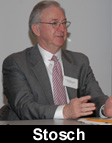
VaBIO has posted their latest Podcast. The guests are members of the state legislature. In addition to biotech issues, Senator Stosch talks about taxes and transportation.
This edition of the Virginia Bioscience Podcast features several elected officials from the Virginia General Assembly discussing the role of state government in the development of the biotechnology industry.
This panel discussion was recorded on December 14, 2006 at the Virginia Biotechnology Association’s policy conference on effective state economic development policies for the bioscience industry. The panelists include three members of the Senate of Virginia: Walter Stosch of Henrico County, Ryan McDougle of Hanover County and Benjamin Lambert of the City of Richmond. Also speaking on the panel is Dr. John O’Bannon, a member of the House of Delegates representing a suburban district in Henrico County and Patrick Gottschalk, Virginia’s Secretary of Commerce and Trade. The moderator of the session is Hugh Keogh, the president of the Virginia Chamber of Commerce.
The program starts with remarks by Delegate O’Bannon, followed by Senators Stosch and McDougle, then concludes with a question from the audience.
The focus of the program is what the state should specifically do to help expand Virginia’s biotechnology industry. The panelists also address major issues facing the legislature such as the transportation impasse and tax increases.
The program lasts approximately twenty minutes. The host of the program is Mark Herzog, executive director of the Virginia Biotechnology Association.
Thursday, January 11, 2007
Eli Lilly Cancels Virginia Insulin Plant
Eli Lilly and Co. said on Thursday it would stop construction of an insulin manufacturing plant in Virginia because it can meet expected capacity needs with existing sites.
In addition, Lilly said it would offer a voluntary exit package to up to 250 employees of 1,000 workers at the manufacturing site in Lafayette, Indiana.
The Indianapolis-based drug maker also said it would make "significant" new investments at a site in Kinsale, Ireland, where the company does manufacturing for biotechnology products.
Lilly said it would take estimated restructuring and asset impairment charges of about $155 million to $185 million. The company will take a fourth-quarter charge of 5 cents against earnings per share, it said.
Monday, January 08, 2007
Stem Cell Battle Looming at the General Assembly
Controversial bills will start session
Democrats want law to prevent ban on stem cell research
BY A.J. HOSTETLER
TIMES-DISPATCH STAFF WRITER
Saturday, January 6, 2007
Virginia Democrats will propose a package in the coming legislative session to specifically authorize embryonic stem cell research at state universities.
The package is an attempt to prevent a possible ban on studying embryonic stem cells, said a spokesman for Del. Brian J. Moran of Alexandria, the House Democratic Caucus chairman. It would lay the groundwork for Virginia legislators to someday authorize significant state spending to support the research, such as in California and Maryland.
Embryonic stem cells are master cells that grow into any type of body tissue. Scientists want to use them to develop new treatments for Alzheimer's, diabetes, spinal-cord injuries and numerous other diseases.
"The hope and opportunity that embryonic stem cell research provides should never be closed to thousands of Virginians suffering in silence," Moran said. "Now we have a real chance to cure the incurable, and it's morally wrong to close the door."
Scientists at Virginia Commonwealth University already study embryonic stem cells. The proposed package would specifically authorize embryonic stem cell research within the Code of Virginia, said Moran's spokesman, Jesse Ferguson.
"So that there's no question, no ambiguity, no question that we can stick something in a budget bill to prohibit it," Ferguson said.
During last year's session, Republicans attempted to prohibit the research in Virginia by eliminating any state funding for any institution conducting embryonic stem cell research.
Moran's bill will be joined by a similar one from Del. Mark D. Sickles, D-Fairfax. Another from the Senate would allow the state to put money aside in the Christopher Reeve Stem Cell Research Fund to pay for such research.
"We need to make sure the commonwealth of Virginia leads the way on this cutting-edge research that will save lives," said Sen. Janet D. Howell, D-Fairfax, who will co-sponsor the Senate bill along with Sen. Creigh R. Deeds, D-Bath.
The package would provide safeguards to ensure that the stem cells were donated with informed consent without any inducement and provisions ensuring review of projects through an oversight committee.
The Senate bill would also ban "therapeutic" cloning of stem cells, Deeds said. The Code of Virginia, which bars cloning for reproductive purposes, doesn't ban therapeutic cloning.
Given that the General Assembly cannot add new money to the budget in this session and that all seats are up for election this fall, "This is all about politics," said political analyst Bob Denton of Virginia Tech. The proposal is more about posturing and partisanship than science, he said.
Del. Robert G. Marshall, R-Prince William, agreed. "They're keeping the door open for a quick, dirty, ill-informed attack ad in November. That's all that does. It doesn't do anything for advancing science," said Marshall, who opposes embryonic stem cell research and leads the joint legislative subcommittee on medical, ethical and scientific issues relating to stem cell research.
Virginia's stem cell scientists, however, welcome the proposal.
"Clearly, this legislative effort will demonstrate that the state is taking the potential of regenerative medicine for curing debilitating diseases seriously," said Raj Rao, a VCU scientist studying embryonic stem cells as part of the school's focus on regenerative medicine.
University of Virginia stem cell scientist Roy Ogle said: "This should speed up progress and put [Virginia] scientists on more even footing with those in other states."
He added that even if therapeutic cloning, used to create self-perpetuating lines of stem cells from a cloned embryo, were banned, there are several major areas of research that Virginia scientists could pursue to better understand the cells, which were first isolated in 1998.
"I applaud the leaders in Virginia who are seeking to make the state a safe place to pursue the exciting area of stem cell research," said Sean Tipton, president of the advocacy group Coalition for the Advancement of Medical Research. "Virginia was the birth place of in-vitro fertilization in the United States, and it's nice to see its leaders again stepping up to protect research that might alleviate human suffering."
Contact staff writer A.J. Hostetler at ahostetler@timesdispatch.com or (804) 649-6355.
This story can be found at: http://www.timesdispatch.com/servlet/Satellite?pagename=RTD/MGArticle/RTD_BasicArticle&%09s=1045855935264&c=MGArticle&cid=1149192517676&path=%21news%21politics
Wednesday, January 03, 2007
VaBIO Policy Video on "YouTube"
Here is the link to the "Virginia Biotech: Vision 2010" video on YouTube.
http://www.youtube.com/watch?v=Bia1MjhUAtY

Comedian Will Farrell on Government Investment in Biotechnology
Will Ferrell giving his speech from the film "Old School" on "government investment in the field of biotechnology." James Carville also appears.
http://www.youtube.com/watch?v=fgsJjy359i0
