Great news about the upcoming 2006 Mid-Atlantic Bio event in Washington next week. According to the conference management team, pre-registration crossed the 700 threshold last night.
This is great news for the Maryland and Virginia biotech communities. The more attention this event gets the more interest we will have from investors, experienced managers and entrepreneurs from other major bioscience markets.
If you haven't signed up, do so before Tuesday to receive the pre-reg fee.
Saturday, October 07, 2006
Mid-Atlantic Bio Pre-Registration Over 700


New River Pharma Drug Approved
More great news for Virginia biotech companies. This is from the Roanoke Times:
Will a new ADHD treatment make or break New River Pharmaceuticals?
A Radford company gets the go-ahead by the FDA to produce its first drug, NRP104
By Jeff Sturgeon | jeff.sturgeon@roanoke.com | 981-3251
A green light glowed Friday for a clutch of Radford drug executives who received tentative approval to sell a potentially lucrative treatment for attention deficit hyperactivity disorder.
New River Pharmaceuticals Inc. said the approval "is contingent upon final scheduling by the U.S. Drug Enforcement Administration."
The company predicted sales will begin during the April-June quarter of 2007. New River previously hired Organichem Corp. of Rensselaer, N.Y., to produce the pills. Officials don't envision filling any new manufacturing jobs.
But the Food and Drug Administration gave Western Virginia a regional business milestone: a homegrown biotechnology company taking a prescription medicine to market.
Success seems to be all the more remarkable because 10-year-old New River Pharmaceuticals employs only about 35 people (though it received help from a partner company that is larger).
The stock closed Friday before the news was released at $26.21, down $1.08, on a slightly higher-than-average trading volume of 567,949 shares.
ADHD is a psychiatric condition responsible for classroom fidgetiness and general unruliness seen in some children. Researchers have estimated that nearly 8 percent of school-age children had ADHD in 2003 based on information from parents, according to the Centers for Disease Control and Prevention. That adds up to millions of potential customers for New River, which sought approval to initially market its drug to children ages 6 through 12.
Drugs are already on the market for this condition and selling quite well. New River's treatment is designed to be as effective as these drugs but comes with a bonus. It's designed to produce little or no recreational high for those inclined to exceed the therapeutic dose or ingest it by unconventional means, such as snorting.
If regulators think the proof is adequate, they could grant doctors leeway to prescribe refills, saving patients the trouble of visiting the doctor monthly. That, in turn, could boost the drug's popularity beyond that of more tightly controlled ADHD stimulants, such as market leader Adderall XR. Friday's announcement left the classification question unresolved, however.
The most bullish backers say New River's drug could succeed Adderall XR as the market leader. This would be in keeping with New River's stated mission to create improved versions of widely prescribed drugs.
Earlier in the process, New River formed a strategic partnership with Adderall's manufacturer, English drugmaker Shire, in return for assistance. And Shire is planning to help market New River's drug as a next-generation improvement over its own in exchange for a share of the wealth it generates.
Andrew Forman, an analyst with W.R. Hambrecht+Co., whose firm helped take New River public two years ago, predicted before the announcement that sales could total $244 million in 2007 and rise to nearly $1.2 billion in 2010. By that time, New River would like to have approval to market to adults as well.
For perspective, the top-selling drug in the United States last year, cholesterol-lowering Lipitor, generated revenue of $8.4 billion for its owner, said data tracker IMS Health.
If Forman is correct, New River's drug would climb to the status of a blockbuster, an industry term for any preparation that brings in $1 billion or more for its owner.
That's not $1 billion in profit, mind you. Forman predicts New River's share of the profit will be closer to $200 million in 2010 and $5 million next year.
"This is the most important day in the company's history," Forman said Friday before the announcement. "You can't do anything in the pharmaceutical industry unless the FDA approves your product. This is the first time the FDA has responded to this company doing anything since they started."
A green light would "validate" the company's drugmaking technology and, by extension, drugs in its pipeline of future products, Forman said.
Less clear is what kind of impact a favorable announcement might have on the company's hometown of Radford. New River Pharmaceuticals is not a highly visible corporate citizen amid the city's small business community. Chief Executive Officer R.J. Kirk, who lives in rural Belspring, is perhaps better known in Radford than his business because of his vocal participation on the board of visitors of Radford University.
Michelle Linkous, executive director of the Radford Chamber of Commerce, was not aware that Friday was an important day for the company, nor was the chamber president Robert Roy.
But many local eyes are watching. Joe Meredith, president of the Virginia Tech Corporate Research Center in Blacksburg, where the company's main research and development laboratory is located, said by e-mail:
"I would suggest that FDA approval continues to reinforce the notion that great science and great businesses are continuing to grow at the CRC."
Still ahead would be such decisions as the drug's name and appearance. The compound still goes by its laboratory name of NRP104. Chemically, it's lisdexamfetamine dimesylate (pronounced liz-DEX-am-feta-meen die-MEZ-il-late).
Though a mouthful, it's a term that might be well worth learning to say.
Tuesday, September 19, 2006
$26 Million in Funding for Two Richmond Companies
This is great news for biotechnology in Virginia.
2 biotech companies get funding
One has produced a blood test for the unborn; the other firm is focusing on tumor cells
BY JEFFREY KELLEY
TIMES-DISPATCH STAFF WRITER
Tuesday, September 19, 2006
Two Richmond-based biotechnology companies have secured more than $26 million in venture-capital funding.
Living MicroSystems Inc. received $18 million, its second round of financing in less than two years. CellPoint Diagnostics Inc. received $8.5 million, its first funding.
The deals closed late last month. Both firms are in the Virginia BioTechnology Research Park in Richmond and have the same president and CEO, Mike Grisham.
"The really hard work is now ahead of us," Grisham said yesterday. "Getting capital just gives you the runway to go execute, and this is all about execution."
The 16-employee Living MicroSystems will use the money to finish clinical trials of a blood test for early detection of Down syndrome and other genetic abnormalities in unborn babies.
Grisham said the blood test, performed on the mother, is safer than the current procedure, called amniocentesis. That requires drawing and examining fluid from the uterus, and it poses the risk of a miscarriage.
Funds will also go toward a strategy to commercialize the product if federally approved.
The eight-employee CellPoint will use funds in part to expand a management team and test a technology the company has developed that can analyze cancerous-tumor cells before they turn into deadly lumps.
Grisham believes CellPoint's product has potential to better target therapies -- which may work in one person but not in the next -- in patients with breast, lung, prostate or colorectal cancers.
Ultimately, the product could be used for early detection of those fatal diseases. Clinical trials allow Grisham to publish his firms' findings in medical journals. That data also can be used to apply for regulatory approval.
"Our next big milestone is commercialization," he said.
Mike Grisham is one of the speakers at the 2006 Mid-Atlantic Bio meeting next month.
Thursday, September 14, 2006
Mid-Atlantic Bio Conference, Oct 10 - 11, 2006, Washington, DC

Participate in the 2006 Mid-Atlantic Bio Conference
October 10 and 11, 2006
Ronald Reagan Building (Washingon, DC)
Mid-Atlantic Bio is the only industry and investor conference and exhibition dedicated to promoting the growth of biotechnology in the region. The Conference is collectively sponsored by the Mid-Atlantic's most influential bioscience and investor associations, MdBio, the Mid-Atlantic Venture Association (MAVA), and the Virginia Biotechnology Association (VaBIO). The initiative benefits from broad regional support, including the investor and greater business communities, academic institutions, government agencies, and partnered regional associations.
The conference provides the platform for conducting business, and building broad alliances with key organizations and audiences sharing a common interest in the long-term growth and stability of biotechnology in the Mid- Atlantic. The event aims to bring together a critical mass of public and private stakeholders – including biotechnology and pharmaceutical senior executives, scientists and researchers, academia, policy makers, legislators, venture capitalists and media – and provide the premiere Mid-Atlantic networking and business development forum favorably positioning the region’s biotechnology industry in terms of its collective strengths, business opportunities, resources, and core competencies among key constituencies.
At a Glance
o Date: October 10 and 11, 2006
o Location: Ronald Reagan Building (DC)
o Attendance: 800+ (expected)
o Program Offerings:
o 12 dynamic workshops/panel sessions
o 6 open-forum topical roundtables
o 16-20 company presentations to investors and collaborators
o 3 plenary sessions
o 50+ scientific posters
o 50+ exhibitors
o Goal: Accelerate business growth, create investment opportunity, and advance product commercialization
For more information and to register, visit http://www.midatlanticbio.com/.
Wednesday, March 29, 2006
Leveraging Growth in the Life Sciences Through Strategic Alliances
Life Sciences Luncheon: "Strategic Alliances: Leveraging Growth in the Life Sciences"
Where: Charlottesville, VA :: Connected Community Conference Room :: 999 Grove Street
When: Friday, April 28, 2006, 11:30am – 1:00pm
Fee: VPTC/VA Bio members - free, Non Members $15 (lunch provided)
VPTC and VaBIO are teaming up once again to co-host this Life Sciences Luncheon which will feature Mike Drzal, an attorney with the law firm LeClair Ryan, and Dr. Jonathan Sackier. Together they will provide an overview of strategic alliances and review how business and financial objectives can be achieved by leveraging them, illustrated by a few real life case studies.
These informal sessions, geared toward those in the life sciences industry --which includes bioengineering, biomedical, biotech, medical devices, pharmaceuticals, and healthcare-- aim to provide practical, nuts-and-bolts lessons to help entrepreneurs hone the skills needed to create, manage and grow successful life sciences businesses at any stage. In addition, these events facilitate networking amongst area life science industry professionals.
A light lunch and beverages will be provided thanks to our generous sponsor:
Sunday, February 26, 2006
VPTC Tech Awards 2006: Honoring Technology Developments in Central Virginia
 VPTC 8th Annual Tech Awards Dinner
Thursday, May 11, 2006, Farmington Country Club, Charlottesville, VA
Tickets - $100 for members and $130 for guests
RSVP Online
Join the Virginia Piedmont Tech Council (VPTC) at its 8th annual Tech Awards dinner, the annual showcase event that honors individuals and organizations who's technology developments are turning the nations investment spotlight on our region and our market. Companies are recognized that have made successful innovations, and a special award is presented to acknowledge the contribution of an area educator who creatively uses technology in the classroom. Select sponsorship opportunities remain available. All event details can be found at the VPTC Tech Awards Website
This year’s keynote speaker, Terry Sharrer, Ph.D., Curator of Health Sciences at the National Museum of American History, Smithsonian Institution, will talk about innovations in healthcare from an unlikely source – the Amish. His talk "Catching up with Horse and Buggy Medicine" will share the experiences of patients of the Clinic for Special Children in Strasburg, PA. Here Amish and Old Order Mennonite children arrive by horse and buggy to access 21st century molecular medicine and receive life saving interventions. If similar medicine were practiced by today's hospitals, there would be substantial benefits in terms of cost savings and improved outcomes. Learn more about how all Americans could follow this unique cost-effective and accessible model of healthcare practiced by the Plain People.
For more information contact Gail Milligan at 434-817-6303 or visit www.vptc.org.
About the Keynote Speaker
Terry Sharrer is the Curator of Health Sciences at the National Museum of American History, Smithsonian Institution, where he has worked for thirty-six years. He speaks and writes about a range of life science subjects, specializing in genetic technology. He has done video documentaries on the Human Genome Project, the beginning of gene therapy, and the molecular biology of cancer. He holds a PhD in history from the University of Maryland, has authored some three dozen publications, and currently is writing a history of molecular medicine. He is involved in the community via the National Foundation for Cancer Research, the Immune Deficiency Foundation, and various other organizations. With his wife Patty, and sons Alex, age 13, and Nicholas, age 17, he lives in Hamilton, Loudoun County, VA.
Friday, February 03, 2006
Biotech After Hours in Charlottesville Hosted by VPTC & VaBIO

VPTC and VaBIO are pleased to announce the next in their ongoing series of Biotech After Hours to be held Thursday, March 16, 5:30 - 7:00 pm in Charlottesville, VA. This event will be hosted by UVA's Biomedical Engineering Department and sponsored by Diffusion Pharmaceuticals LLC, a drug discovery and development company pioneering a revolutionary approach to treat life-threatening diseases.
All VPTC and VaBIO members are welcome and encouraged to attend; you do not have to work in a life sciences or biotech company to participate! Come enjoy excellent networking, food and a cocktail, and meet faculty as well as learn about exciting, collaborative projects within UVA’s Biomedical Engineering Department. Tours of the facility will also be offered throughout the event.
The event is FREE to VPTC and VaBIO Members/$25 non-members
Details, directions and RSVP online
Thursday, December 22, 2005
MdBio and TCM: Merger Before New Year?
According to the Washington Business Journal, the two Maryland bioscience organizations may have finally reached an accord.
MdBio, Tech Council merger inches closerNeil Adler
Staff Reporter
The two main advocacy groups for Maryland's biotechnology industry appear ready to tie the knot after two years of negotiating in a somewhat tension-filled courtship.
At their most recent board meetings, leaders of MdBio and the Tech Council of Maryland voted to move forward with discussions, and officials say a deal could be wrapped up in the next couple of weeks. The two organizations expect to make an announcement soon, perhaps even before year's end.
Officials from both groups say there are two or three operational issues with the agreement that need to be ironed out before the merger can be completed. Officials declined to provide specifics.
More than a year ago, the organizations called off their attempt at a merger. Negotiations fell through in part because the two had different structures. The Tech Council is a member organization; MdBio was not.
However, in May MdBio announced it would become a membership-driven group. At the time offered it offered $500,000 to buy the Tech Council's biotech membership list. Tech Council officials said no thanks.
That caused a strain in the relationship, a strain that officials say no longer exists.
"We're very optimistic the deal can get done," says Jim Leslie, MdBio's chairman and a senior vice president in the Vienna office of executive search firm Kincannon & Reed.
MdBio's board voted about two weeks ago to move forward with the merger talks. The Tech Council's board voted Dec. 20 to proceed.
Given the history between the organizations, however, officials are cautious in speaking about the deal until it's done.
"We've still got some things to clean up," says John Nyland, the Tech Council's chairman and an executive with IBM Global Services in Bethesda.
In September, Nyland told Washington Business Journal that if an agreement was going to be reached by the two organizations, it would happen in 2005. Nyland now says the groups continue to exchange documents as they finalize the merger. They are currently drafting new bylaws for a combined entity.
Under the proposed deal, the Rockville-based Tech Council would have two divisions, one focused on advanced technology companies, the other focused on biotech firms and called MdBio.
Sources say Bob Eaton, president of Frederick-based MdBio, is likely to lead the biotech division.
Eaton declined to comment, saying there is "nothing new to report right now."
This would be great news for the entire region. Let's hope they can get it done.
Monday, December 05, 2005
State Funding for Bioscience Research
Here is an article about the need for increased state funding for Virginia's research efforts. UVA and Tech are not in the top 50 yet, so additional funding is critical.
George Mason president calls for more research funds
By Neil Adler, Staff Reporter
George Mason University needs about $25 million in additional funds over the next five years from Virginia lawmakers to propel it into a top-notch research university that will better compete for jobs in biotechnology and other high-tech industries, says its president.
In a meeting Nov. 28 with delegates from Northern Virginia, George Mason President Alan Merten called on the legislators for additional funding, which the university would use specifically to recruit faculty members known worldwide for their focus in cancer biology and bioengineering, as well as the neurosciences.
Merten says the university is hoping to generate research dollars of about $150 million over the next five years, putting George Mason in the top 100 research universities nationwide. Investing in George Mason will benefit Virginia's economy over the long term, university officials say, by attracting additional researchers and biotech companies to the community.
While several hundred biotech and pharmaceutical companies have a presence in Virginia, the bulk of attention -- and research dollars -- still go to research organizations and private-sector companies along the Interstate 270 corridor in Montgomery County, where a much larger cluster of drug-development firms exists.
Local biotech industry officials say for Northern Virginia to rival Montgomery County, universities must do their part by improving education and convincing top scientists and lab researchers to conduct their work locally. Some officials in Virginia say a new campus of the Howard Hughes Medical Institute, a roughly $500 million facility slated to open in Ashburn late in 2006, will do its part to command attention.
"George Mason University is poised to become a premier research facility in the world," Merten says in a statement. "The best way to achieve this goal, from an economic standpoint, is to invest in growing Mason's already solid base of highly regarded researchers."
The university says it recently hired Matthew Kluger as its vice president of research. Kluger previously was vice president of research and dean of the School of Graduate Studies at the Medical College of Georgia.
Will Governor Warner include any funding for bioscience research or for recommendations from the State Biotech Commission? Rumors are rampant, but no solid info yet...
Wednesday, November 02, 2005
Virginia Leads the Way in Forensics
The cover story in the latest Virginia Business magazine is all about Virginia's leading role in the field of applied forensic technology. From the state's leadership in developing the DNA database to private firms such as Bode Technology and Commonwealth Biotechnologies.VaBIO board member Kevin McElfresh is on the cover, looking quite stern and unforgiving! The headline is "Sorting Out Murder, Madness and Mayhem." I guess they asked for a CSI pose? Click here for the article.
Congratulations to Paul Ferrara, Kevin McElfresh and Tom Reynolds on the excellent article. It is great to see the biosciences on the cover of the state's leading business magazine.
Tuesday, November 01, 2005
Mid-Atlantic Bio Exceeded Expectations
 The 2005 Mid-Atlantic Bio Conference, the first industry-led regional bioscience conference for Maryland and Virginia, concluded successfully last week at the Ronald Reagan Building in Washington, D.C.
The conference attracted more than 600 attendees (we are still counting registrations and walk-ins-- could be nearly 650) from approximately 250 companies, 15 states and 40 different venture capital investment funds. The 58 booth exhibit hall was sold out and more than 770 total registrations were sold.
Those in attendance heard more than 60 speakers on diverse topics such as raising investment capital, the future of personalized medicine, innovative treatments for obesity and aging, biodefense initiatives, nanotechnology and selecting the best tools for bioscience research. The keynote speaker on the opening day, Dr. George Poste, of the Biodesign Institute at Arizona State University, spoke about the convergence of biotechnology, engineering, and computing in healthcare delivery. The feedback from attendees regarding the Ronald Reagan International Trade Center was surprisingly positive. We were afraid that the site was just too big for our event. Based on the comments, we are seriously looking at the Reagan building again.
Tuesday, October 18, 2005
Bioscience View from Southwestern Virginia
There are challenges to developing good lifescience companies anywhere, but they can be reasonably overcome if the basic building blocks are good: good science and good people. Southwestern Virginia is beginning to distinguish itself with an ability to grow and support bioscience in this area.
Several factors play into this ability. First and foremost is a community desire to be successful. Residents of regions such as Hampton Roads or Northern Virginia which is already growing at a good clip don't wake up in the morning with economic development on their minds. In this area, however, leaders from the Roanoke Valley, New River Valley, and surrounding jurisdictions share a common desire to help businesses grow locally and often come together to provide the resources for them to do so.
Recently that desire for economic development has resulted in an increased availability of capital. Lack of money is often bemoaned as a reason why more early stage companies do not grow. In Southwestern Virginia, however, there are active angel and VC networks that seek to get the best and brightest opportunities funded. The Roanoke-Blacksburg Angel Network and the $12 M NewVa fund are two examples of organizations focused on all businesses, including lifescience, and which actively review and invest in small and growing companies.
This area is also fortunate to have as its economic and intellectual pillars the Carilion Health System and Virginia Tech. These two employment and development leaders are key to many of the bioscience and growth initiatives in the region. Virginia Tech, in addtion to being a nationally recognized research university, had the foresight to establish the VT Corporate Research Center which today houses more than 100 companies and 1800 employees in growing technology and life science companies. Carilion, in addition to being a $1.2 B healthcare system with ten hospitals, actively supports growing medical companies, established the Carilion Biomedical Institute, and created Riverside Center in downtown Roanoke as a new 27 acre village for biomedical and business growth within an already successful city.
These factors have helped create a growing stream of lifescience focused companies in this region and an ability to fund and grow many more. For every Luna Innovations, TechLab, Intrexon, and American Biosystems already established here, there are many more small companies just forming and looking for the opportunities that will help them grow into a next generation of successful biotech companies.
Friday, October 14, 2005
Area Life Science Companies Chosen to Make Presentations for Venture Funding at 2005 Mid-Atlantic Bio

Fifteen Companies Represent Various Industry Sectors, Stages, and Geography;
Two Virginia Companies on Deck: Diffusion Pharmaceuticals LLC and DiaKine Therapeutics, Inc.
ALEXANDRIA, Va., Oct. 12 /PRNewswire/ -- Fifteen companies demonstrating the diverse cross-section of the mid-Atlantic bioscience industry have been selected to present before venture capitalists at 2005 Mid-Atlantic Bio: TheConference for Industry and Investors, the region's premier biotechnology forum scheduled from October 26-27 at the Ronald Reagan Building and International Trade Center in Washington, DC.
The majority of companies selected are from the hosting states of Maryland and Virginia, with the balance coming from the two other leading biotech states in the mid-Atlantic, New Jersey and North Carolina. Selected companies represent a cross-section of industry sectors, with most coming from thetherapeutic sector and the remainder focused on the diagnostics and tools categories. Regarding investment stage, most of the presenting companies are from the early/preclinical and clinical stages, with three seeking funding for expansion.
"The principal criterion for the companies we chose was that they be quality companies that represent fundable opportunities reflective of the current interests of investors," said Don Rainey, a partner in the Reston, Va. office of Intersouth Partners, who co-chaired the Selection Committee withMatt Zuga, managing director of Red Abbey Venture Partners, Baltimore, MD.
"The slate of presenting companies provides a glimpse into the entrepreneurial environment of the mid-Atlantic biotech region. We are seeing more seasoned management teams with compelling science, intellectual property, technologies and business ideas which speak to the growth of this industry in the mid-Atlantic region."
"The diversity of the selected companies' investment stage and sectors reflects positively on the growth occurring within the life sciences industry," said Julia Spicer, Executive Director of MAVA. "We are pleased with the quality and strength of the companies that were chosen by our investor-driven selection committee. The Selection process and the overall investor portion of the 2005 Mid-Atlantic Bio conference was bolstered by the strong leadership and participation of veteran venture capital firms including:Anthem Capital, Boulder Ventures, The Carlyle Group, Emerging Technology Partners, H.I.G Ventures, Intersouth Partners, Maryland Venture Fund, MedImmune Inc., New Enterprise Associates, Quaker BioVentures, Red AbbeyVentures, Tall Oaks Capital, and Toucan Capital Corp."
The companies selected to present at 2005 Mid-Atlantic Bio are:
* A&G Pharmaceutical, Inc. (Columbia, Md.)
* Cerionx, Inc (Pennsauken, NJ)
* Cylex Inc (Columbia, Md.)
* DiaKine Therapeutics, Inc. (Charlottesville, VA)
* Diffusion Pharmaceuticals LLC (Charlottesville, VA)
* GlycoMimetics, Inc. (Gaithersburg, Md.)
* Intradigm (Rockville, Md.)
* MacroGenics (Rockville, Md.)
* MaxCyte Inc. (Gaithersburg, Md.)
* NeoDiagnostix (Rockville, Md.)
* PharmAthene (Annapolis, Md.)
* SCYNEXIS (Research Triangle Park, NC)
* Sensors for Medicine and Science (Germantown, Md.)
* Sequoia Pharmaceuticals, Inc. (Gaithersburg, Md.)
* TissueGene, Inc (Gaithersburg, Md.)
The conference is a jointly-hosted regional event for the bioscience industry and the investor community, combining components of a regional industry convention and investor conference under one roof dedicated to promoting the growth of biotechnology in the Mid-Atlantic region. Mid-Atlantic Bio is hosted by four of the region's most influential bioscience andinvestor associations: The Mid-Atlantic Venture Association (MAVA), the TechCouncil of Maryland (TCM), the Virginia Biotechnology Association (VaBIO), and MdBio.
As part of the 2005 Mid-Atlantic Bio program, executives from presenting companies are participating in several pre-conference programs, including a networking event and a one-day boot camp session to help prepare for the formal presentations before investors. This effort by the organizers was made to encourage collaboration beyond the one-day presentation.
Event information, registration, presentation, and sponsorshipopportunities are available at http://www.midatlanticbio.org/. Additional information is available by calling 703.683.5698.
Thursday, October 13, 2005
Medical Device update #1
 Intelliject LLC was named one of Richmond's companies to watch at last week's Greater Richmond Companies to Watch (CRCTW) Event. Congratulations to Eric, Evan and the Intelliject team for building value in another Virginia device company. Intelliject is an example of how moving into an incubator can assist a start-up be sucessful. Could it be the right move for your company? If you want to learn more you should check out a series of rountables being sponsored by the Virginia Business Incubation Association :
"Small Business Incubators are an effective community economic development tool. These roundtables will provide a forum for information sharing among incubator staff and board members, local and regional economic developers and PDC staff. The goal is to strengthen existing alliances and to forge new ones in an effort to help promote incubation and in turn job creation and investment in our communities"
Events are scheduled:
OCTOBER 27, 2005
Franklin Business Incubator
601 N Mechanic St
Franklin, Virginia
Cathy Davison
NOVEMBER 3, 2005
VTKNowldgeworks
@ VATech
2200 Kraft Drive
Blacksburg, Virginia
Jim Flowers
NOVEMBER 10, 2005
Fairfax Innovation Center
4031 University Dr
Fairfax, Virginia
Judy Barral
Email Morgan Bird (mbird@franklinva.com) for more information.
If your company is looking for new sensor technologies you may be interested in attending this year's SensorsGov 2005 conference. It's being held will be held on December 6-8, at the new Hampton Roads Convention Center (www.theHRCC.com) in Hampton, Virginia. There are two sessions on Human Health Monitoring on Wednesday (Dec. 7).
Wednesday, October 12, 2005
North Carolina's Biotech Money--$25m a Year Forever?
 How can Virginia compete with states such as North Carolina when, in addition to the significant public contribution to fund the life sciences, there are also private sector billionaires who are committed to building wetlabs and fund research? In addition to David Murdock's money, the state is on the hook for about $25 million a year... for perpetuity. Here is the link to an article on MSNBC:
http://msnbc.msn.com/id/9648742/
That is also the theme of a new article in the Triad Business Journal. Here is a link:
http://triad.bizjournals.com/triad/stories/2005/10/10/story2.html?t=printable
The opening section of the article identifies the remarkable situation in North Carolina:
While Research Triangle Park dominates the biotech scene in North Carolina, the state is eager to build other life science clusters to replace the disappearing manufacturing base. With Winston-Salem's Piedmont Triad Research Park bankrolled primarily by the private Wake Forest University, the state's public universities plan to spend $25 million helping to launch Kannapolis' N.C. Research Campus, and $16 million for operations each year.What about Virginia? Here is the next section:
Other states are boosting biotech as well beyond their best-known location. While the big tax money in the industry is the billions granted through federal government for research every year, states support the industry by funding infrastructure initiatives in the hope of generating high-paying jobs.
For example, North Carolina's 2005-2006 budget includes $4.9 million for biotechnology initiatives at N.C. Central and N.C. State universities, and $3 million in support of statewide biotech training initiatives, among other projects.
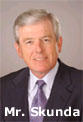
Yikes! Bob Skunda is right about the state's commitment. Rumors continue to fly about Governor Warner's outgoing budget. Will he support any of his own Biotechnology Commission recommendations? Even one?North of the border in Virginia, its biotech capital is also the state capital of Richmond, location of the Virginia BioTechnology Research Park. The park opened for business in 1995, the product of a partnership between Virginia Commonwealth University, the city of Richmond, and the state. Park President and CEO Robert Skunda said Virginia has indeed been trying to grow additional biotech clusters in other parts of the state, including Blacksburg to the west, Charlottesville near the center, and Prince William County to the north.
"Most of the money has gone to the universities (in those areas) to invest in research buildings, that they hope will eventually translate into economic activity in research parks" established by the universities, Skunda said. That amount is substantial, he added, probably totaling up to $100 million over the past decade.
However, direct state funding to help establish research parks around those outlying universities has been "right around zero," Skunda said. As in many other states, he said, the administration of Gov. Mark Warner has been scrambling to overcome budget deficits, making extra funds for park development hard to come by.
"It's going to be very difficult to compete looking at places like Kannapolis," where a private individual will pick up a large part of the startup tab, Skunda said. "It's just phenomenal to have somebody come forward with that kind of commitment. The challenge there will be building the accompanying base of research."
Monday, October 10, 2005
November 4: First in Life Sciences Luncheon Series in Charlottesville Announced
Biotech Patents and Licensing: First Luncheon in Series Starts Friday, Nov. 4 in Charlottesville
The Virginia Piedmont Technology Council and VaBIO are teaming up to co-host quarterly Friday luncheons in Charlottesville. These informal sessions are targeted at those forging the way in the life sciences -- be it bioengineering, biomedical, biotech, medical devices, pharmaceuticals, or healthcare.
The November Life Sciences Luncheon -- the first in the series -- will feature MaryAnne Armstrong, Ph.D., a partner with the intellectual property law firm Birch, Stewart, Kolasch & Birch LLP, as the guest speaker. Dr. Armstrong will demystify the federal legislation known as CREATE Act, signed into law last December. The act amends existing patent law to permit the patenting of inventions made through joint research among multiple partners if certain conditions are met.
Dr. Armstrong will also provide updates on the intellectual property considerations surrounding the Bayh-Dole Act. In her practice, Dr. Armstrong works with inventors, companies and university technology transfer agents in the fields of immunology, chemistry, pharmaceuticals, diagnostics, biotechnology, medical devices and others.
The event will be held on November 4th, from noon to 1:30 p.m. in the conference room at the Connected Communities building, 999 Grove Street in Charlottesville. The event is free for VaBIO and VPTC members. Non-members pay only $15 per person.
Lunch and beverages will be provided thanks to our generous sponsor: Birch, Stewart, Kolasch & Birch LLP.
Register online with the VPTC (sorry, registration has closed as the event is full)


University of Virgina Said to Lag Behind Nation in Biomedical Funding
According to an article in the Daily Progress published October 8, 2005, UVa is said to lag behind the Nation in biomedical funding. The article states that biomedical research funding in the U.S. nearly doubled between 1994 and 2003 and that UVa's research funding increased 49 percent between 1996 and 2005.
To read the full story, click here:
http://www.dailyprogress.com/servlet/Satellite?pagename=CDP%2FMGArticle%2FCDP_BasicArticle&c=MGArticle&cid=1031785530106&path=!news
Friday, October 07, 2005
Tim Kaine on Biotechnology
 As noted below, we are taking a look at what each of the three candidates for governor have posted on their campaign websites (or in media releases) about biotechnology or issues such as tech transfer, R&D tax credits, venture capital, etc.
The relevant page on Tim Kaine’s site is located here:
http://www.kaine2005.org/issues/economy.php
On that page, dedicated to economic development initiatives, the Kaine Campaign does not seem to have much listed on biotech, except in one reference to projects in Roanoke. Here is the full quote:
Roanoke and New River Valleys
* Support safety and capacity improvements to Interstate 81
* Invest in Virginia Tech, Radford, and the Roanoke Higher Education Center
* Support biotech research through the development of the Carilion Biomedical Institute, a public-private collaboration of Carilion Health Systems, Virginia Tech, and the University of Virginia
* Support arts and cultural attractions that attract tourism
There is a separate page dedicated to higher education located here:
http://www.kaine2005.org/issues/education_college.php
Elsewhere on the Kaine Campaign site, we did find a media release congratulating the Virginia Biotechnology Research Park on the Philip Morris R&D facility deal. Here is the link for that:
http://www.kaine2005.org/news/releases/release_20050405.php
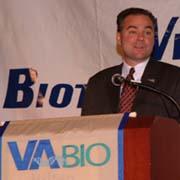
While the websites may not have much detail on biotech issues, it is clear that the candidates are aware of the challenges faciling the industry. When the lieutenant governor spoke at the 2003 Virginia Biotechnology Summit (pictured above), he was able to draw upon his experiences as Richmond's mayor working with the development of the biotech park. Jerry Kilgore also spoke at that same conference, addressing the achievements of forensic science and Virginia's investments in the DNA database.
While it would be great if biotech-related economic development issues had more prominence in the platforms of the candidates, it could also be a double-edged sword. In some other states, biotech policy has been overshadowed by divisive issues such as cloning and stem cell research.
If anyone has other links to the Kaine Campaign’s biotech agenda, please add it to the comments below.
Thursday, September 29, 2005
Jerry Kilgore on Biotechnology
What have the candidates for governor said about biotechnology, tech transfer or state funded research? We will look at the plans from all three candidates for governor over the next few days. We will start today with some information from Jerry Kilgore's campaign plan for technology-related economic development:

______________________________________
"Virginia is home to businesses and universities that are on the forefront of innovation and cutting-edge research in biotechnology, nanotechnology, wireless innovation, nuclear and particle physics, aerospace, information systems, and many other disciplines. Now is the time to leverage these advances, build upon the successes of the Center for Innovative Technology, and make Virginia the place for the business and higher-ed communities to turn knowledge into the power to create jobs, advance discoveries, and turn experimentation and inventions into reality for our families and our future. As Governor, Jerry Kilgore will:
- Create a Governor's Research Partnership Fund to attract new businesses willing to partner with universities on research initiatives and co-locate their operations and/or laboratories on or near the university campus;
- Establish a comprehensive policy in Virginia law to address technology transfer and commercialization of intellectual property through performance grants for private sector research investment, intellectual property ownership, and expanded state support for copyright offices within universities;
- Leverage the deployment of VORTEX (a broadband fiber-optic network linking Virginia's universities with each other and national and international research networks) to link research driven business ventures with our universities and spread the cyber infrastructure to rural parts of the state so that private sector researchers could be located in Sussex, Danville or Wise and still work side-by-side with their public sector counterparts at any of the doctoral universities;
- Implement the key recommendations of the Virginia Research and Technology Advisory Commission (VRTAC), including the creation of a defined tax exemption for private investors rather than the current unpredictable tax credit program;
- Expand the scope of CIT to become the Virginia Advanced Research Alliance
the focal point and engine that will drive all of these initiatives forward."__________________________________
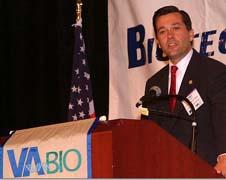
Back in 2003, Kilgore addressed the Virginia Biotechnology Summit. His press release about the event is available here.
If anyone has more information about some of these positions, especially on the "Partnership Fund" and tech transfer issues, please let us know.
Tuesday, September 27, 2005
Biotech @ Greater Richmond Companies to Watch Event
The Greater Richmond Companies to Watch (CRCTW) Event is being held next Wednesday October 5th at Main Street Station. This event will feature the announcement of the first annual GRCTW list (10-12 companies) deemed most likely to have significant future economic impact in the region. The event is organized by The Venture Forum with sponsorship by Troutman Sanders and others.
I want to personally encourage each of you to attend this event and take advantage of the opportunity to hear the featured speaker Scott Rasmussen, co-founder of ESPN, and network with representatives of up and coming businesses in the region. For more information and to register see the event web site: http://www.grctw.com/index.html
You won't want to miss being there to find out which life science companies make the list..........................I'm sworn to secrecy but I think our industry will be nicely represented.
Subscribe to:
Posts (Atom)